Free phone eligibility in 2026 is simpler than most people think, and millions qualify without knowing it.
If you receive SNAP, Medicaid, SSI, or meet the income threshold, you may already have everything you need to get a free smartphone and free monthly service right now.
This guide breaks down every eligibility path clearly — so you can check your status, gather your documents, and apply with confidence.
What Program Offers Free Government Phones in 2026?
The only active federal program providing free government phones in 2026 is the Lifeline Assistance Program.
Lifeline is an FCC program established in 1985 and administered by the Universal Service Administrative Company (USAC). It provides a monthly discount of up to $9.25 on qualifying phone or internet service to eligible low-income households — and many participating carriers use that subsidy to offer a completely free smartphone plus free monthly service to qualifying applicants.
The Affordable Connectivity Program (ACP), which used to supplement Lifeline benefits, ended in May 2024 and is no longer accepting applications. Lifeline is the program you need to focus on.
The Two Ways to Qualify for a Free Phone
Your household needs to meet one of the following two criteria to qualify — income-based or program-based. You don’t need to meet both.
Path 1: Income-Based Eligibility
Your total household income must be at or below 135% of the Federal Poverty Guidelines.
For 2026, here are the income thresholds:
- 1-person household: up to ~$20,331/year (~$1,694/month)
- 2-person household: up to ~$27,594/year (~$2,299/month)
- 3-person household: up to ~$34,857/year (~$2,905/month)
- 4-person household: up to ~$41,625/year (~$3,469/month)
- Each additional person: add approximately ~$7,263/year
For Alaska and Hawaii, the federal poverty guidelines are higher — check the current USAC table at lifelinesupport.org for state-specific figures.
If your income is close to these limits, don’t assume you don’t qualify. Even being slightly under the threshold is enough, and the calculation is based on your total household gross income, not your take-home pay after taxes.
Path 2: Program-Based Eligibility
If you — or anyone in your household — currently participates in any of the following government assistance programs, you automatically qualify for Lifeline, regardless of income:
- SNAP (Supplemental Nutrition Assistance Program / food stamps)
- Medicaid (including state-funded healthcare programs)
- SSI (Supplemental Security Income)
- Federal Public Housing Assistance (Section 8 voucher or public housing unit)
- Veterans Pension and Survivors Benefit
- Tribal programs (Bureau of Indian Affairs General Assistance, Tribal TANF, Food Distribution Program on Indian Reservations, Head Start with income qualification)
Program-based eligibility is the fastest path to approval. If you have a current SNAP or Medicaid benefits letter, your application can often be verified instantly through the National Verifier database — no additional documents needed.
Special Eligibility Groups
Beyond the standard income and program pathways, certain groups have additional ways to qualify.
Seniors: Low-income seniors often qualify through SSI or Medicaid. Regular Social Security retirement income alone doesn’t qualify you — but if your income is below the 135% FPL threshold, you qualify on income grounds. Medicare by itself is not a qualifying program; Medicaid is.
Veterans: Participation in the Veterans Pension or Survivors Benefit program qualifies you automatically. Active military ID alone does not qualify — the pension or survivors benefit enrollment is what triggers eligibility.
Domestic violence survivors: Under the Safe Connections Act, survivors of domestic violence or human trafficking can receive emergency Lifeline support for up to six months. Qualifying through income hardship at 200% or below the FPL, or through enrollment in WIC or the Free and Reduced-Price School Lunch Program.
Students with Pell Grants: College students who received a Federal Pell Grant in the current award year qualify for Lifeline automatically.
The One-Per-Household Rule: What You Need to Know
This is the rule that causes the most confusion — and the most denied applications.
Lifeline provides one benefit per household, not one benefit per person. A household is defined as any individual or group of people who live at the same address and share income and expenses.
That means if two adults in the same household both qualify individually, only one can receive the Lifeline benefit. The second person cannot get a separate benefit for the same address.
There’s one important exception: if two people at the same address maintain completely separate economic units — separate finances, separate incomes, separate household expenses — they may qualify as independent households. In that case, you may need to complete a Lifeline Household Worksheet explaining the arrangement.
If you’re blocked due to a duplicate benefit at your address, contact USAC directly to clarify your living situation. Don’t assume you’re ineligible — this issue is resolved more often than not once the economic separation is documented.
What Documents Do You Need to Apply?
The documents required depend on which eligibility path you’re using.
For income-based eligibility, acceptable documents include:
- Prior year federal or state tax return (front page only)
- Three consecutive months of pay stubs dated within the past 12 months
- Social Security benefit statement
- Unemployment compensation documentation
- Pension or retirement benefit statement
For program-based eligibility, acceptable documents include:
- Current benefits letter or notice of participation from SNAP, Medicaid, SSI, or another qualifying program
- Current Medicaid card or ID issued by the program
- Notice of eligibility dated within the past 12 months
For proof of address (all applicants), acceptable documents include:
- Recent utility bill
- Current lease or mortgage statement
- Government-issued mail received at your address dated within the past 90 days
Make sure all documents are current — expired benefit letters or outdated pay stubs are one of the most common reasons applications are denied or delayed.
What Disqualifies You From Getting a Free Phone
Even if you initially meet the eligibility criteria, certain situations can lead to denial or termination of benefits:
- Another household member already has Lifeline: The one-per-household rule applies strictly. If someone at your address is enrolled, you cannot add a second benefit.
- Income above the threshold: If your household gross income exceeds 135% of the FPL and you’re not enrolled in a qualifying program, you won’t qualify on income grounds.
- Expired or incorrect documents: Documents dated more than 12 months ago are generally not accepted for eligibility verification.
- Missing annual recertification: Every year, you must confirm your ongoing eligibility. Failing to do so results in benefit termination.
- Not using the phone: If your carrier doesn’t charge a monthly fee, you must use your phone at least once every 30 days to stay active.
Tribal Lands: Enhanced Eligibility and Benefits
If your household is located on federally recognized Tribal lands, you receive enhanced Lifeline benefits — up to $34.25/month off qualifying service instead of the standard $9.25.
Eligibility on Tribal lands follows the same income and program-based rules, plus additional qualifying programs like Bureau of Indian Affairs General Assistance, Tribal TANF, and the Food Distribution Program on Indian Reservations (FDPIR).
The higher benefit amount makes Lifeline significantly more powerful for Tribal households, often enabling full coverage of a standard monthly wireless plan.
How to Check Your Eligibility Right Now
Checking your eligibility takes less than two minutes and doesn’t require creating an account or submitting any documents upfront.
- Go to the official National Verifier at checklifeline.org or lifelinesupport.org
- Enter your state, household size, and income level — or select the government program you participate in
- The system will instantly indicate whether you qualify based on federal databases
- If approved, you’ll choose a participating carrier and complete your enrollment to get your free phone
If the National Verifier can’t immediately confirm your eligibility through its databases, you’ll be asked to upload supporting documents. Most applications processed with documents are reviewed within 1–7 business days.
Recertification: Keep Your Free Phone Active
Qualifying for Lifeline isn’t a one-time process. Every 12 months, USAC will send you a recertification notice asking you to confirm that you still meet the eligibility requirements.
Recertification is simple — you just need to confirm that your income is still within the limit or that you’re still enrolled in a qualifying program. You can do it online, by phone, or through your carrier.
Miss the deadline and your service will be terminated. Set a reminder 11 months after your enrollment date to stay ahead of the process.
You Qualify: What Happens Next?
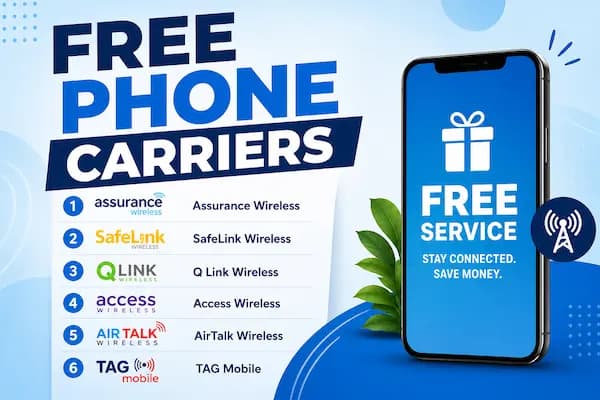
If you’ve confirmed your eligibility, the next step is choosing a Lifeline carrier. Top providers in 2026 include Assurance Wireless (T-Mobile network), SafeLink Wireless (Verizon network), Q Link Wireless, AirTalk Wireless, and TAG Mobile.
Each offers free talk, text, and data — with the carrier shipping a free smartphone to your address after approval. The entire process from application to receiving your phone typically takes between 3–10 business days.
Disclaimer: This content is for informational purposes only and is not affiliated with the FCC, USAC, or any government agency. Eligibility rules, income thresholds, and program requirements are subject to change. Always verify current eligibility criteria at lifelinesupport.org or fcc.gov/lifeline-consumers.